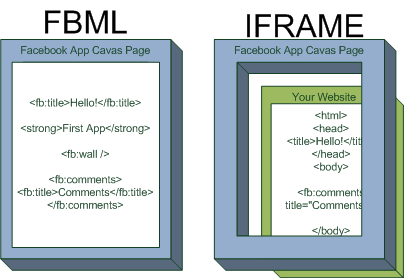
There are a four major takeaways from this announcement for small business owners and marketers:
The FBML arena was much more complicated than it had to be. Because of this, it took longer to make more complicated custom tabs and apps. This means that development time is shorter, and you really just need a web developer to make custom tabs now. It's not necessary to find an FBML developer.
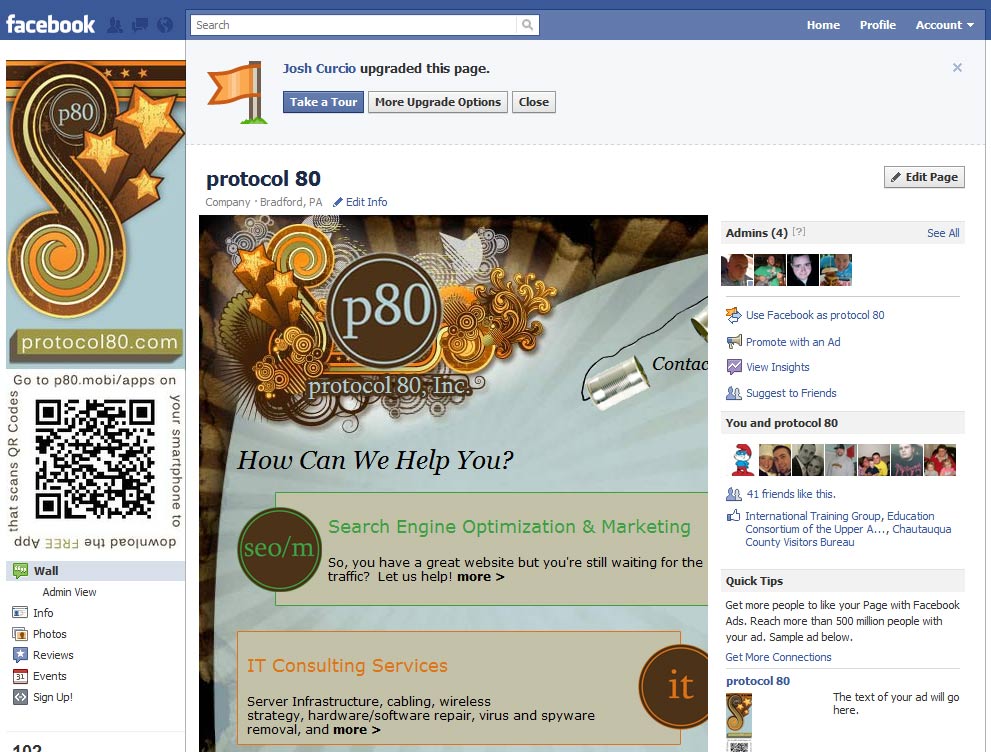
You no longer have to take 'No' as an answer to customizing the look of your custom tab or app. Because an iframe is simply a window in a website that shows your website through the window, you have complete control over the colors/branding/and features of your custom tab now.
One of the primary downers of the FBML era was that it was very difficult to track usage with your standard analytics package like Google Analytics. Because the iFrame content is hosted on your website, you can easily add tracking code.
Have an ecommerce site? Maybe a site that features several opt-in or registration sections? No problem! Start selling/registering/opting-in on Facebook. This move to iFrames makes it a piece of cake!
As I mentioned above, an iframe is essentially a window on a website page that shows another website through it:
Now that it's much easier to setup custom tabs and apps on Facebook, you should take a look at your website's functionality and see what makes sense to make available on Facebook. Here are some examples:
There are clearly limitless more options, but this list is a good start. What are your thoughts on this change?