Living in a very rural area, we see many delays by small businesses and non-profits when it comes to web marketing. Users do adopt web platforms at a much faster rate than the rural businesses and non-profits. This means that rural users are forced to shop from and use services from businesses in larger markets or national corporations. This obviously hurts rural and local businesses.
One such example that I see time and again is real estate. If I had $1 for every time I drove by a real estate sign or viewed a realtor's website and thought to myself, "If I were them, I'd be doing.... X, Y, Z...", I would be sipping from an umbrella-strawed drink on a beach somewhere right now... I wish I was writing this from a beach :).
This frustration inspired me to write this post on some low hanging fruit that Realtors in small markets should be using to better their marketing and likely reduce their ongoing costs.
We've written about the importance of having a professional-looking website in the past. The look of your site is equivalent to the look of your storefront or office. Online, the design of your site says a lot about the image and personality of your overall business and what a prospect should expect when/if they decided to reach out and contact you.
We all know a bad website when we see it. Don't fool yourself because your relative maintains your site for you, or you maintain your own site with Frontpage (a big no-no, by the way). Be objective.
Look at your competition's website and see how yours compares. Don't look at content (yet), but rather look at aesthetics. How does your site "feel" compared to your competition. This is not the time for a lowest common denominator comparison. Who is the 800 lbs gorilla in your industry and your market area? If it's already you, does your website reflect that relative to your competition?
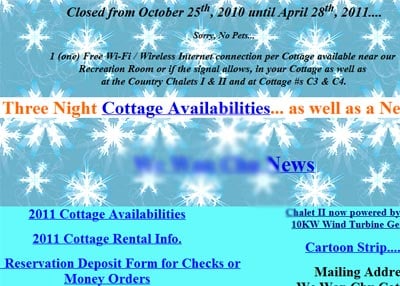
Static HTML sites are a thing of the past. They leave too much room for layout and design errors/inconsistencies which ultimately makes your business look unprofessional.
A web content management system like our own c80 Content Management System, allows you to login to your website, and make changes to it right through the web browser from any computer with an Internet connection. There's no need for software to be installed. Content management systems (CMS) tend to be much more user-friendly than using a web development application like Dreamweaver or Frontpage as well.
Another nice feature of c80 and many other content management systems is that pages can be setup so you never have to update the site's navigation, look and feel, or structure. This saves some of the complexities associated with maintaining a static site. Templates also make entering commonly used formats, such as the basic listing for a new property much easier and consistent.
Like a CMS, a property database may be the most efficient way to manage a realtor's properties from the realtor's perspective and the user's perspective. Think of a database like a big spreadsheet. Example:
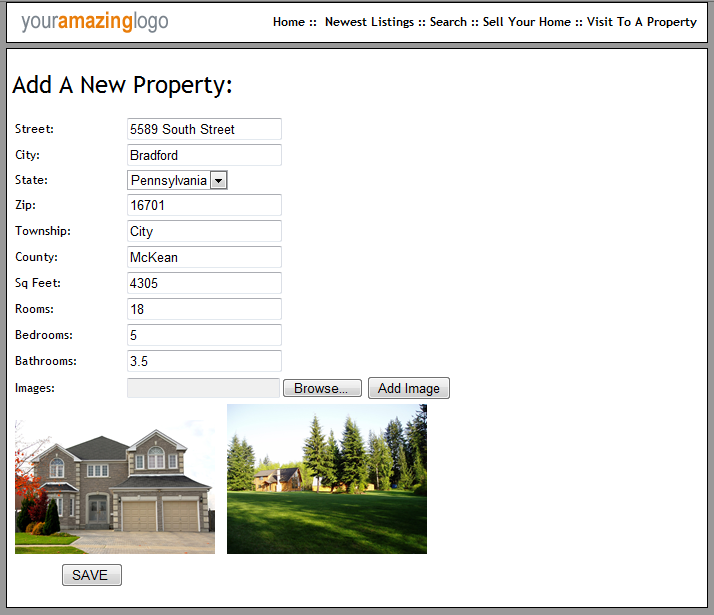
As the manager of the website, the Realtor would not even see the database behind the scenes. They would work with web pages to manage the data in the database like the following:
Here's why:
There's a common misconception that after you invest in a content management system or property database, you'll keep paying for it year after year. That's not the case at all. Most CMSs and Custom web applications are a one-time upfront fee with no ongoing costs. That is how our content management is setup and our development works.
Based on an average realtor's commission on a $100,000-$200,000 property sale, they would break even after the first house is sold!
Check back soon for my upcoming posts including 'How Realtors Should be Using Mobile Marketing', many other web marketing tactics that rural realtors are missing out on.