
 Inbound marketing has been declared “dead” so many times it should have its own obituary section on the internet. SEO is doomed. Organic social media is toast. AI is replacing everything.
Sure.
And yet… inbound continues doing what it has done for decades: It works.
Not because it's trendy. Not because a vendor said so.
But because inbound mirrors human behavior.
When people have a problem, they do three things:
- They look for answers.
- They look for options.
- They look for someone they trust.
Inbound helps you become that someone.
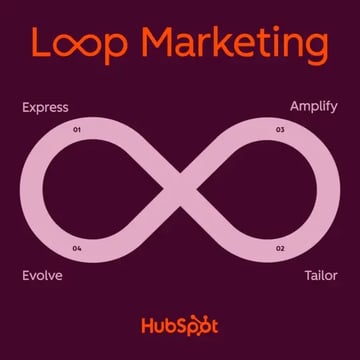
And in 2026, inbound is evolving -- not ending. Buyers aren’t moving linearly through a funnel anymore. They loop. They bounce. They revisit. They self-educate long before talking to a salesperson. That’s why inbound + loop marketing is the new powerhouse combination.
Loop marketing* doesn’t replace inbound. It extends it.
→ Inbound gives the buyer what they need.
→ Loop ensures they keep coming back until they’re ready to buy (and long after they become a customer!)
(*Related Resource: New to loop entirely? Check out this Loop Marketing intro to ... join the loop. [Sorry.])
So … What Does 'Inbound Marketing' Actually Mean?
HubSpot’s definition still nails it: Inbound attracts customers through valuable content and helpful experiences tailored to them. Outbound (traditional marketing) interrupts. Inbound connects.

But in 2026, the real difference is this:
Inbound isn’t about pushing messages.
It’s about earning attention – repeatedly.
Inbound shows up exactly when your best-fit, soulmate buyers want help. Loop marketing keeps those buyers engaged, educated, and re-engaging as their needs evolve.
It’s not mass-blasting your brand all over and generating cool marketing reports filled with vanity metrics. Put simply, it’s about being un-ignorable when it matters.
Inbound vs. Outbound Marketing (The Short Version)
If outbound marketing is the mall lotion kiosk shouting “Can I ask you a quick question?”...
... Inbound is the blog that helped you solve your dry-skin problem long before you even stepped foot in the mall.
- Outbound: Marketer chooses the moment. Buyer endures it.
- Inbound: Buyer chooses the moment. You show up helpfully.
- Loop: Buyer returns to you because every time they loop back into research mode, your content is the most useful thing they can find.
Intent + timing. That’s the entire difference between inbound and outbound strategy.
The Buyer’s Journey (Still Relevant, But Now Nonlinear)
The classic flow of buyer behavior still is a valuable tool to keep in mind. You may know it as Awareness → Consideration → Decision:
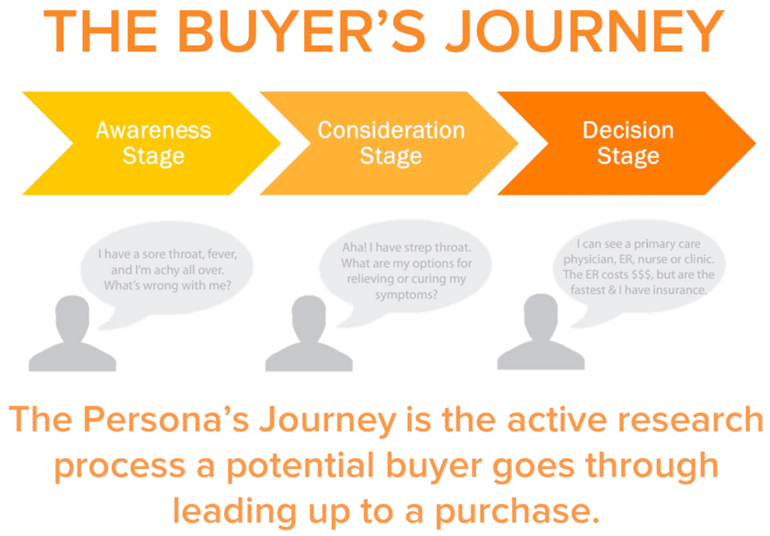
But in real life? Buyers don’t always behave like a three-step checklist.
They read a blog post in January. Watch a video in March. Download a guide in June. Loop back in December when the budget resets.
Your content needs to support every loop, and welcome them back like you expected them.
Where Content Fits In (Spoiler: Everywhere)
Inbound runs on content. Not for vanity, but because it’s how buyers learn, especially in B2B complex industries (think: manufacturing, healthcare technology, industrial solutions, etc). For markets where purchase decisions go beyond a quick “AI Search Results” impulse buy, you need to have content.
Content marketing is the engine that:
- Builds trust
- Establishes authority
- Attracts qualified traffic
- Keeps people looping back when they hit the next decision point
Adhering to the inbound methodology, content is not a campaign. It’s not a seasonal or “when I feel like it” deliverable. It’s a system -- one that compounds over time.
Loop marketing strengthens the system by treating content as a subscription-like experience instead of a single touchpoint.
 What Is an Inbound Marketing Strategy in 2026?
Think of inbound strategy as the driver, your website as the engine, and inbound itself as the vehicle.
But in 2026, that vehicle isn’t following a predictable highway anymore -- it’s navigating a loop. Buyers don’t move straight from awareness to decision. They circle, revisit, compare, abandon, re-engage, and return months later with fresh questions.
A modern inbound strategy accounts for that reality. But more importantly, it uses it to your advantage.
A real inbound strategy in 2026 gives you:
1. Crystal-Clear Targets (Not Just “More Leads”)
Actionable means specific. Your strategy should define:
- SQL-qualified industries, job titles, and account profiles
- Pain points that indicate buying intent
- Search behaviors that signal where the buyer's at in the loop
- KPIs that ladder into revenue
Clear targets = better content, better conversions, better sales alignment.
2. A Defined Audience With Real Intent Signals
Knowing your audience is no longer enough. You must know what they do that tells you where they are in the loop, such as:
- Search queries tied to urgency
- Video watch thresholds
- Pricing-page visits
- Repeat views of the same awareness-stage content
- Chatbot or calculator engagement
Inbound strategy includes tracking the behaviors that reveal readiness.
3. Content Mapped to the Actual Buyer’s Journey (Not the Idealized One)
Instead of forcing buyers into Awareness → Consideration → Decision …
You create content for:
- Initial spark: “Do I even have a problem?”
- Deep dive: “What’s really causing this?”
- Solution exploration: “How do others solve it?”
- Shortlist formation: “Who do I trust?”
- Re-entry: “I’m back -- what changed since last time?”
- Validation: “Can I defend this internally?”
- Post-purchase: “Help me succeed so I advocate for you.”
Your content becomes a living ecosystem that supports every point on the loop versus a static funnel.
4. Conversion Paths That Don’t Make People Think
Every high-performing inbound strategy includes frictionless, intuitive paths like:
- Clear calls to action on every blog
- Soft conversions (interactive tools, quizzes, templates)
- Hard conversions (consultation forms, demo requests)
- “Choose your next step” user experience patterns
- Personalized offers based on what the buyer just did
If the user has to think about what to do next, they probably won’t do it.
5. Nurturing That Advances the Conversation (Instead of Resetting It)
In 2026, nurture isn't “Here’s the content you missed.” It’s “Here’s what you need based on what you just told us – directly or indirectly.”
Effective nurturing:
- Remembers where the buyer is in their loop
- Builds on their last interaction
- Delivers highly relevant recommendations
- Feels personalized without feeling creepy
- Helps prospects self-qualify faster
A “drip” campaign in 2026 is as weak as it sounds. You need a relevant waterfall sequence of touchpoints that adapts, learns, and guides.
 6. A Loop-Aware Life Cycle System
This is where strategy becomes powerful.
A 2026 inbound strategy assumes:
- B2Buyers will exit and re-enter at any time
- A portion of your leads will convert on their second or third loop
- Selling doesn’t end at “closed won”; instead it begins a new cycle
- Existing customers are one of your strongest inbound channels
That means building:
- Post-purchase loops (onboarding, education, product help)
- Advocacy loops (reviews, case studies, user generated content)
- Retention loops (upsell paths, new-solution awareness)
- Re-engagement loops (win-back sequences, “what’s changed?” updates)
The New Goal: Build a Loop They Want to Stay In – and Talk About
An inbound strategy in 2026 isn’t about pushing people where you want them to go; it’s about earning their time from the initial touchpoint through all of their returns.
Let's think about that for a second: You. Have. To. Earn. It. For a long time, it was enough to produce content, launch it into orbit, get clicks/views/engagement, and feel good about ourselves as marketers.
It’s just not anymore.
It’s about intelligent systems and human content creativity working together to form a loop that earns your buyer's dollar.
When your system is truly loop-ready, buyers:
- Stay longer
- Engage deeper
- Revisit more frequently
- Convert more confidently
- Refer more often
- Create content for you
Inbound wins when every touchpoint feels earned, not inserted.
Inbound Still Works, But It’s Smarter Now
Inbound works because it aligns with how humans solve problems: with research, curiosity, and trust.
Inbound is not about "expert hacks." It’s not about keyword or content stuffing. It’s not about quick fixes and instant results.
Inbound is about building a system where:
- Helpful content earns attention
- Attention becomes trust
- Trust becomes action
- Action becomes a long-term customer relationship
- And customers keep looping back because the value never stops
Inbound is your engine. Loop marketing is your momentum.
Ready to Turn Inbound Into a Growth Engine?
Reading about inbound is the easy part. Building a system that reliably produces qualified traffic, inbound leads, and actual ROI? That’s where teams get stuck.
To learn more about how the inbound marketing process successfully works in practice, check out our “What to Expect” guide below:

How to Audit your Online Marketing
If you are executing digital marketing, congratulations! You are most likely already one step ahead of your competition, and making strides to meaningfully connect with prospects online. But, how do you know if you’re seeing continual success year over year, and improving your metrics?
Without the tools in place to analyze and benchmark your efforts, it is impossible to scale your online marketing and ensure continuous success.