“They march to the beat of their own drum.” … “Break the mold.” … “They’re one of a kind”
We’ve all heard these clichés and plenty of others like them, used to describe something that stands out in a crowd.
But in manufacturing, especially with niche products, it’s hard to stand out. Capabilities, equipment, and products can all look very similar, whether that's actually true or not.
So how do you set your product apart in a market where everything looks the same?
Sure, “quality” and “service” matter, but those words alone don’t explain why a buyer should choose you from a long list of manufacturers. Your competitors are saying the same thing. All of them.
We’ll take a look at some of the most overused buzzwords and messaging tricks in the B2B world, how they impact your bottom line, and tips on building a strategy that will make you stand out.
Why Do Industrial Marketing Buzzwords Fall Flat?
Seamless integration
Client-centric solutions
State-of-the-art
Value-added
Cutting-edge
Industry-leading
Best-in-class
Game-changer
Unless you live under a rock, you’ve probably seen these words countless times. They show up in every industry, well beyond B2B. But when everyone uses them, they lose meaning and say very little about what makes a business different.
Consider how two completely different industries can use the same buzzword to “describe” their products:
- “Our liquid foundation is a game-changer for your daily makeup routine!”
- “Our new press brake is a game-changer for your production line.”
Both promise a big difference, but neither explains what that difference actually means.
The fact that the same adjective can describe both a makeup product and heavy machinery says plenty about how vague it is, and very little about either product. Why are these two products game-changers? That’s what buyers actually want to know.
In an ad or webpage with a lot of “fluff” and buzzwords, many questions are left unanswered:
- What does it actually say about the company selling it?
- Who is the target audience?
- What’s it exactly for?
- Why should the viewer care?
- How does it help? What problem does it solve/solution does it offer?
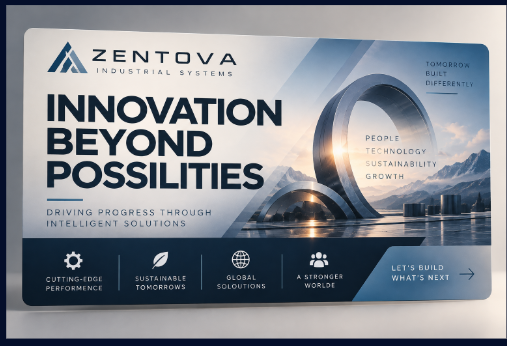
This messaging might convey a lot of value to your company; what are they actually delivering to buyers? Buzzwords aren’t automatically bad if they’re true, but so often they don’t answer the questions the buyers are asking when researching their possible purchases.
A good rule of thumb: Show, Don’t Tell. There has to be a difference between claiming quality and demonstrating what quality means for the customer.
To turn the above sentence into a stronger brand differentiation example, we could write:
“Our new press brake delivers consistent bends within ±0.5 of the target angle, reducing rework and helping keep your production line moving.”
What Vague Language Can Cost Marketing and Sales
Generic messaging gives buyers little reason to take the next step with your business. If a competitor could use the same sentence on its website without changing a word, it’s time to get more specific. Replace the overused adjectives with proof – including social proof, like customer testimonials.
But being specific doesn’t need to translate to being overly technical. It means giving buyers clear answers to three questions:
-
Fit: Does this product or service solve my problem?
- Proof: Is there evidence to support the claim?
-
Impact: What difference will it make for my business?
If your messaging doesn’t check these three boxes, it may be too broad, attracting inquiries that don’t match your capabilities. Then your sales team is left explaining your value and defending pricing. Buyers want answers to these questions:
- Can you make my part?
- Can you solve my bottleneck?
- Can you hit the tolerance?
- Can you meet the lead time?
- What makes you different?
- What other support and services do you offer?
Build a Niche Differentiation Strategy Around Buyer Needs
Next, identify your buyers and focus your messaging on what matters to them. Consider the types of customers, applications, and production challenges you’re best equipped to support. Then look beyond the product to what sets your business apart, such as
- Engineering support
- Flexible order quantities
- Application expertise
- Clear documentation
- Reliable delivery
Use the Buyer Value Translation Framework to connect each distinguishing characteristic to a clear buyer benefit and back it up with evidence.
|
The Buyer Value Translation Framework |
|||
|
Claim |
Proof |
Buyer |
Outcome |
|
What are we saying about ourselves or the product? Could a competitor say the same thing? |
What makes this claim true? Replace the buzzword adjectives with proof. |
Who cares about this product or service? Connect the technical details to the person who needs it. |
Why should they care? |
Using this sequence, you can turn a general claim into a clear reason for buyers to care about what you offer. Your marketing doesn’t need to follow the same order every time. You could start with the outcome and work your way back to the claim.
Here’s a simple structure to guide you:
We help [specific buyer] solve [specific problem] through [capability], backed by [proof].
To write messaging that connects with your audience, understand your buyers' challenges, priorities, and reasons for choosing a supplier. Download our Buyer Persona Guide for more details.

Once you identify what sets your business apart, build your messaging around it. Pair clear explanations with creative marketing language to make your value easy to understand and remember. Give buzzwords substance by explaining the specific benefit behind them.
Here are two examples of value propositions for B2B:
- “Exceptional service” → Work directly with an engineer to review your part before production.
- “Flexible manufacturing solutions” → Prototype and short-run machining for teams refining a new design.
Keep your B2B audience in mind and explain how your capabilities address their challenges. Lead with the outcome buyers care about, then use technical details to show how you deliver it. Connecting those details to a specific customer problem helps buyers understand what your solution could mean for their business.
This message could also vary depending on what role they fill on the team. Refine your message to their specific concerns and day-to-day job responsibilities. Each concern will require different messaging.
|
Role |
Concerns |
|
Can you meet my technical requirements? |
|
|
Procurement |
Can you deliver reliably on time? |
|
Operations |
Will it keep production moving? |
|
Executive |
How will this impact our costs and business risk? |
Use this 10-Second Clarity Test to see how clearly your website and marketing communicate what you offer:
10-Second Clarity Test:
**If the answer to the last question is “yes,” keep translating. |
Give Buyers a Clear Reason to Choose You
Differentiation in your marketing message starts with defining your relevance and value to your primary audience. Replace generic claims with clear explanations of the problems you solve, so prospective customers understand what to expect from your product or service.
You don’t necessarily need to eliminate all buzzwords from your copy; you just need to explain what they actually mean. Why is your product cutting-edge? Your messaging should answer that question with specific capabilities, evidence to support your claims, and measurable results.
Remember that the goal is not necessarily prettier copy. The goal is a clearer reason to click.
For more ways to make your specialized industrial offerings stand out, download our guide to Content Marketing 101 for Niche Industries.