
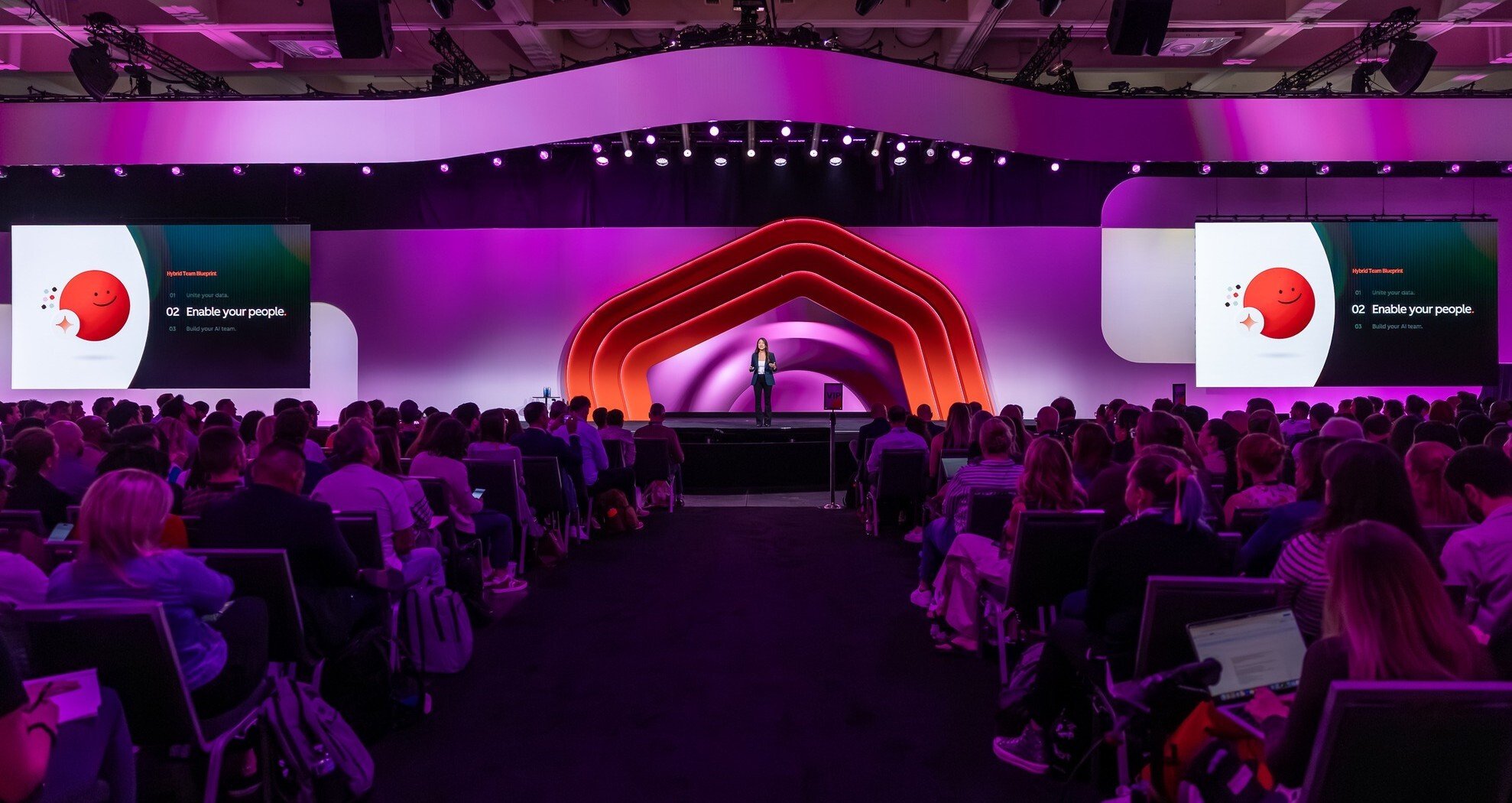
HubSpot Spotlight is a twice-a-year event where the sales and marketing software giant unveils major features across its many hub platforms. We attended the summer/fall spotlight, held during HubSpot’s annual INBOUND marketing conference Sept. 2-5, 2025, in San Francisco – and, boy, do we have news to share with you.
We don’t always 100% agree with the grandiose proclamations HubSpot makes at these events. Still, these launches are worth tracking if you’re trying to scale or simply be more efficient.
For this particular Spotlight, many product announcements tied into a central theme of “hybrid teams.” By that, HubSpot doesn’t mean remote and on-site – it means human plus AI.
That’ll become evident as you read every major HubSpot announcement below.
5 Big HubSpot Spotlight 2025 Reveals – & Whether You Should Care
The new features, all in beta and virtually all tied to AI, are focused on eliminating tedious, manual work and letting human teams focus on what they do best.
1. Smart CRM
 When digging through historical customer data, it’s easy to feel like a paleontologist hunting for a species that might not even exist.
HubSpot’s new Smart CRM not only captures every customer interaction, it also transforms it into intel.
New features include:
- Self-generating data – Use conversational enrichment and smart properties to automatically update support tickets, customer emails, intent signals, etc.
- Smart insights – Proactively analyzes CRM data and identifies what's important, what's changed, and what to do next
- Flexible CRM views – Views now adapt to show Sales the pipeline info it needs, and Marketing the funnel data it craves
Should You Care?
Yes! Finally, a CRM that unifies everyone. The ideal of a self-updating CRM is hugely attractive, considering what we see day in, day out from clients.
Many field sales teams aren’t fully using their company’s CRM, to the point that their bosses have stopped bothering to enforce it. Low adoption equals low manager visibility into buyer meetings, off-target forecasting, and difficulty scaling.
Smart CRM has the potential to benefit field reps, in-house teammates, and customers all at once. The features above should result in less digging, less noise, and better insights. In the end, customers won’t have to repeat themselves because all teams will have access to the same enriched data.
Note: All Smart CRM features are “unbundled” as a standalone item among HubSpot’s offerings.
2. Hello Data Hub; Goodbye Operations Hub
No CRM can magically learn all of your sales data, conversations, and context. There’s so much living in your team’s emails, calls, and face-to-face chats that your CRM can’t possibly ever see.
Or can it?
HubSpot announced Data Hub as the new home for connecting all your data – from every source, in one place. It’s a rebranding of Operations Hub, but to call it only that is a disservice.
Without needing to know coding, you can use Data Hub to get complete context thanks to new AI features and superpowers.
- Data Studio – Leverages AI to auto-organize info from multiple sources into actionable datasets, all in the same UI
- Data Quality – Proactive monitoring & maintenance that pulls in missing profile info for your customer contacts
Should You Care?
Simply, yes. The reimagined platform could be a great crutch for teams that struggle to keep clear, unified, up-to-date data. The Hub could help you:
- Find great upsell targets
- Kill duplicate contacts, fill in missing info, and fix formatting
- Get complete context
“It’s an easy way for marketers to combine and enhance all of their data in third-party applications,” said Matt Sornson, general manager of Data Hub.
Note: Current customers of Operations Hub will receive an automatic upgrade to Data Hub at no extra charge.
3. Breeze Updates
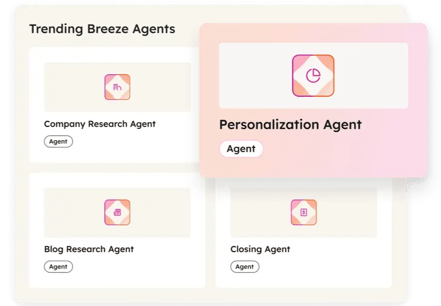
Breeze Agents are HubSpot’s niche AI workers that can assist with everything from content writing to customer service workflows. The company is expanding its Breeze line of AI copilots to handle 20+ new tasks.
The major players are:
- Customer Agent – Handles phone calls, qualifies leads, and gets even sharper with every interaction
- Data Agent – Searches your database, calls, emails, and the web to return insights that save directly to your CRM
- Breeze Assistant & Agents – With access to your calendar, it can prep focus points for meetings, pull details from your deals history, or make a brief based on info in Google Drive
- Prospecting Agent – Now has improved recognition and data analysis of “hot” accounts and follows up with outreach at the right time
- Custom Assistants – Get work done better and faster with AI helpers trained on your specific business intel
- Breeze Marketplace & Studio – Pick from pre-built special agents or customize without any coding, from researchers to social media writers and more.
Should You Care?
Probably, with some caution.
The added polish on previously released AI tools is worth testing out. Artificial intelligence does its best work as an enablement tool rather than a generative tool. That said, we’ve found functionality to be spotty with some of these tools in the past, so look before you leap.
4. Marketing & Content Hubs Get Even More AI-ified
All this data integration isn’t just for Sales. The INBOUND Spotlight showed that HubSpot is hellbent on AI-ifying marketing campaigns, too.
"It's never been harder for companies to get found," said Spotlight speaker and HubSpot CEO Yamini Rangan.
New features in Marketing Hub and Content Hub will combine planning, creation, and optimization in one place. The ingredient that ties it all together is “AI that knows what works for your audience,” HubSpot claims.
Here are the highlights:
- Loop Marketing – HubSpot’s new AI playbook that it basically touted as the next inbound marketing, in terms of its revolutionary impact. The playbook is a set of resources to help you identify your messaging, tailor it to buyers, amplify it across channels, and iterate in real time
- Marketing Studio – AI-powered campaign creation that brings your team together to plan, launch, and optimize campaigns in a single space
- AI-powered email – AI creates complete branded campaigns and tailors every email, landing page, and call-to-action using your customer data
- Segments + personalization – Use AI to uncover segmentation opps and create targeted content that converts
- AEO tools – AI engine optimization is growing in importance as buyers start to ask ChatGPT before they ask you. HubSpot’s new tools may be able to help you rank in chat outputs
Should You Care?
Like any marketing quarterback, we’re eager to dive into HubSpot’s new Loop playbook and learn the game plan.
However, if you’re in a B2B or niche market, some of HubSpot’s sweeping statements do not apply.
“Buyers used to find content on your website,” Rangan said. “Now they find it anywhere but your website.”
The classic buyer’s journey, largely driven by content, is still important – LLMs (language learning models) like ChatGPT need something to learn from, after all. However, 60% of Google searches end in zero clicks, Rangan noted … fair point. And you can probably guess why: Users are finding answers via the AI Overview atop search results.
ChatGPT and AEO (AI engine optimization) is quite different from traditional search engine optimization (SEO), HubSpot also says. That it’s more about answers than about searches. About conversions more than driving traffic.
OK, sure, but for B2Bs the tenets of traditional and AI-based search visibility are nearly identical – providing expert, genuinely helpful content. And for long, highly considered purchases and sales cycles, buyers still need mid-funnel content – from your website.
Where HubSpot’s claims do make an important point is in this: When users are in LLMs, they’re asking deep, specific questions. This *could* mean that Awareness-stage content becomes less important to a content strategy.
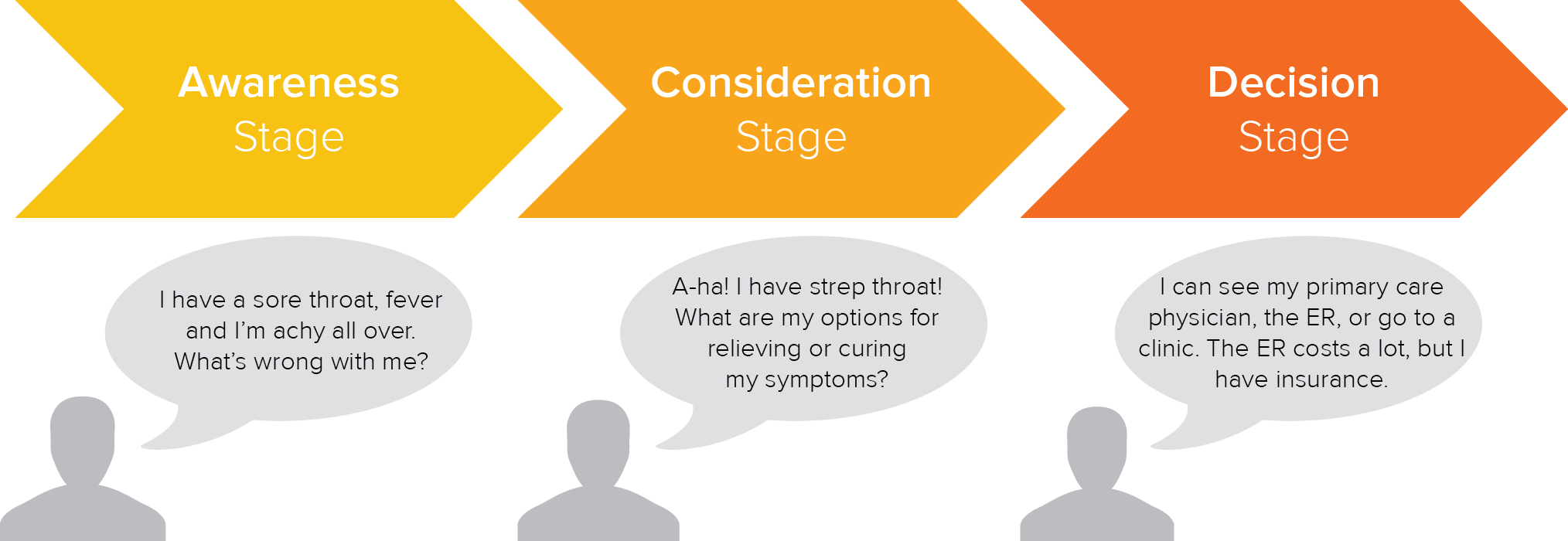
Although some Awareness- and Consideration-stage research may occur via ChatGPT or Google AI Overviews, conversions still need to happen on your website. And while attribution will be tougher to pin down in those cases, the end goal remains the same for us marketers.
5. AI-Powered Quoting – Commerce Hub
HubSpot reports that 86% of B2B deals stall at some point, often because buyers wait days for a quote while sellers jump through manual hoops.
The latest Commerce Hub updates aim to change that. With AI-powered CPQ (configure, price, quote), sales reps can generate branded, accurate estimates in minutes. Faster quoting means a smoother buyer experience and the ability for sellers to keep momentum going.
The upgrades don’t stop there:
- Deal overview dashboards give reps and managers real-time visibility into deal status.
- AI Closing Agent fields pricing and product queries, helping prospects get answers without delay.
- Quote Engagement notifications alert reps when a prospect views or shares a quote, so they can follow up at the right moment.
Because the system learns over time, quoting becomes more accurate and efficient with every deal.
Should You Care?
If you want the team to spend less time wrestling with paperwork and more time closing, then yes.
Industrial deals often involve multiple stakeholders, complex pricing, and custom configurations. A delay in quoting could cause you to lose the deal to a faster competitor.
If it works as HubSpot promises, AI-powered CPQ will remove that bottleneck and give buyers clarity on highly technical sales or solutions.
Just Because You Can, Doesn’t Mean You Should
HubSpot’s fancy feature rollouts don’t mean much until you can tie them to your daily frustrations and business outcomes.
When the Spotlight speakers proclaim something like, “The marketing funnel isn’t working anymore,” remember that in some ways they’re trying to scare the crap out of you. And they’re trying to steer you toward HubSpot’s newest solutions.
Industrial markets are always a little behind others when it comes to the ripple effects of change. Yes, traditional search engine traffic is slipping a little, but it’s not tanking like HubSpot claimed at INBOUND (for B2Bs, at least). And TikTok isn’t suddenly going to become your biggest source of conversions.
We have a whole agency built – and thriving – on “the old way” Rangan said doesn’t work anymore, so take these events with a grain of salt. Inbound marketing best practices nest into the “new” playbook quite well, actually. You’re a B2B, and you have special rules that don’t apply to B2Cs. Sure, digital marketing will change a little for all of us in the coming year, but we’ll continue to grow along with it.
INBOUND TL;DR
Phew – that’s all we can cover for today. HubSpot’s INBOUND 2025 conference was exhausting, it was overwhelming, it was 200+ product announcements.
A handful we were jazzed about, and a couple we’re still slightly skeptical about – even as Certified Hubspot Partners – until we see more info or a few iterations.
Anything AI-related that streamlines technical and rote processes gets a thumbs-up in our book. But we start to feel yucky every time someone touts outsourcing creativity to AI. Nonetheless, with the right mix of tools and a healthy dose of human input, you may see a boost in efficiency by adopting some of HubSpot’s AI content tools.
To learn more about AI marketing best practices, check out our massive resource page:

How to Audit your Online Marketing
If you are executing digital marketing, congratulations! You are most likely already one step ahead of your competition, and making strides to meaningfully connect with prospects online. But, how do you know if you’re seeing continual success year over year, and improving your metrics?
Without the tools in place to analyze and benchmark your efforts, it is impossible to scale your online marketing and ensure continuous success.